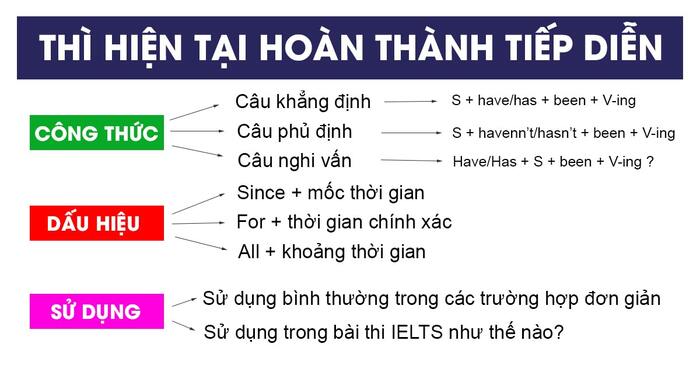
The present perfect continuous tense describes actions that started in the past and are still continuing into the present. It emphasizes duration and ongoing nature rather than completion. For example, 'She has been studying English for two years.' This shows an action beginning in the past and continuing now. Another example: 'They have been traveling through Europe for three weeks.' Here, the travel started previously and continues currently. Additionally, 'I have been working on this project since Monday.' Highlights a start in the past with present relevance. The tense uses 'have/has' plus the verb form -ing. Practice by identifying time expressions like 'for,' 'since,' and 'recently' to determine when an action began. Use it to discuss ongoing activities such as exercise routines, construction projects, or studies. Remember to match auxiliary verbs correctly: 'have' for plural subjects, 'has' for singular. This structure helps convey continuity effectively in both spoken and written English.
Examples of Present Perfect Continuous Tenses
She has been studying English for two years.
They have been traveling through Europe for three weeks.
I have been working on this project since Monday.
He has been feeling unwell lately.
We have been waiting for the bus for ten minutes.
She has been sleeping poorly due to stress.
They have been practicing piano every evening.
I have been reading that novel all summer.
He has been fixing the car since last week.
We have been living here for five years.
She has been cooking dinner while her husband sets the table.
They have been discussing the plan over coffee.
I have been running every morning this month.
He has been learning French for six months now.
We have been saving money for the trip.
She has been gardening all afternoon.
They have been preparing for the exam diligently.
I have been watching that series since it started.
He has been driving to work since January.
We have been exercising regularly.
She has been writing articles about technology.
They have been volunteering at the shelter.
My friends have been playing soccer every weekend.
I have been learning Spanish through apps.
He has been repairing the fence all day.
We have been exploring the city this summer.
She has been teaching English online.
They have been setting up the new software.
I have been listening to podcasts during my commute.
He has been baking cakes for the charity event.
We have been organizing events for the community.
She has been painting landscapes lately.
They have been hiking mountains in the mountains.
My brother has been studying abroad for four years.
My sister has been working as a doctor since 2020.
Our parents have been traveling internationally for decades.
My colleagues have been collaborating on research projects.
I have been taking yoga classes to stay fit.
He has been learning to play guitar slowly.
We have been growing vegetables in our garden.
She has been saving money for her dream vacation.
They have been attending language lessons daily.
My cousin has been traveling across Asia nonstop.
He has been fixing his bicycle repeatedly.
We have been planning the wedding together.
She has been knitting scarves for charity.
They have been studying abroad for several semesters.
I have been practicing photography on weekends.
He has been training hard for the marathon.
Our neighbors have been hosting annual parties.
My uncle has been restoring old cars.
She has been learning calligraphy for fun.
They have been organizing charity runs regularly.
When to Use Present Perfect Continuous
- Use when emphasizing duration: 'I have been studying for three hours.'
- Use with time expressions: 'for,' 'since,' 'lately,' 'recently.'
- Use to show ongoing actions without focus on completion.
- Avoid using with completed actions or specific past times.
Questions and Negations
- Question: Has she been feeling better lately? Answer: Yes, she has been feeling better lately.
- Question: Have they been working late again? Answer: No, they haven’t been working late again.
- Question: Has he been practicing tennis every day? Answer: Not really, he hasn’t been practicing tennis every day.
- Question: Have you been eating healthy? Answer: Yes, I have been eating healthy.
- Question: Has the team been winning matches? Answer: They haven’t been winning matches yet.
Common Mistakes
- Confusing present perfect continuous with simple present perfect.
- Using incorrect auxiliary verb forms.
- Omitting necessary time markers.
- Translating directly from Vietnamese causing awkward phrasing.
Placing the plant under sunlight for proper growth.

Ensuring adequate water supply for healthy roots.

Regular pruning helps maintain its shape beautifully.
Conclusion
Mastering present perfect continuous tense allows you to express ongoing actions clearly and naturally. Practice by describing daily routines, current projects, and persistent habits using appropriate time phrases. Remember to match auxiliary verbs correctly and pay attention to context for accurate usage.

Consistent practice will make this tense feel intuitive in both speaking and writing scenarios.